First, it should be noted that a packaging[1] is an object intended to contain and protect goods, to allow their handling and transport from the producer to the consumer or user, and to ensure their presentation. For its part, conditioning is the first container of a product used for its retail sale. Unlike packaging, which is the container that ensures the safety of the product in its handling, preservation, storage and transport.
Finally, we cannot talk about packaging without mentioning packaging[2]: in addition to its physical functions (protection, transport, etc.), packaging allows to communicate information about the product and supports all marketing or advertising elements such as the brand, slogan or price.
There are 3 types of packaging[3]:
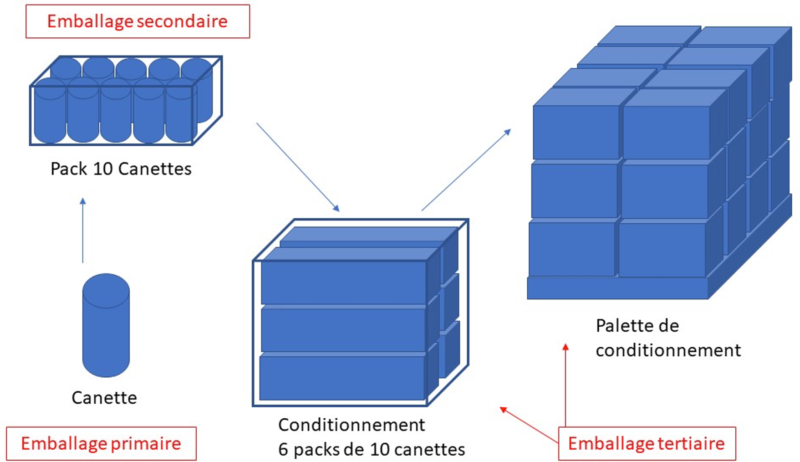
Packaging can also be differentiated according to the final holder: we will speak of household packaging, which corresponds to all packaging that, after consumption of the product, is discarded by households (packaging that ends its life in the municipal circuit is generally considered household packaging). Or industrial and commercial packaging, which concerns all packaging related to industrial activities (BtoB packaging, grouping and transport packaging), etc.
Finally, in the Paper-Cardboard packaging family, we distinguish:
- Corrugated cardboard packaging: used for e-commerce boxes, large format packages, moving boxes, pizza boxes, crates or even bag-in-box. They accounted for almost ¾ of the total production of paper-cardboard packaging, i.e. 2.445 million tonnes in 2019 (in France?) and are mainly used for the food industry.
- Flat cardboard packaging is used for e-commerce envelopes, food, pharmaceutical packaging or cereal or tissue boxes, etc. (559 thousand tonnes in 2019).
- More complex packaging that is used for juice cartons, cylindrical chip boxes, etc.
- Paper bags of small, medium or large capacity, which represented 162 thousand tonnes in 2019.
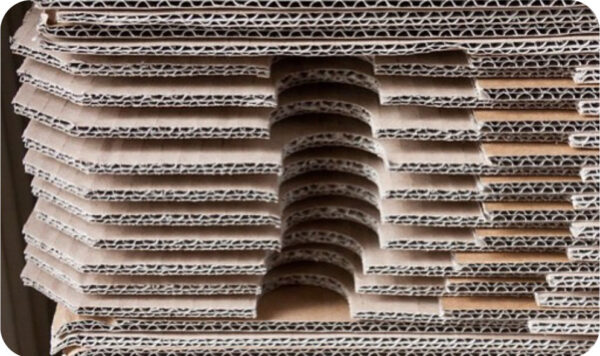
CORRUGATED CARDBOARD
Is a sandwich material: it consists of the assembly by gluing of flat cover papers, kept equidistant by corrugated fluting papers, the thickness of which varies from approximately 1mm to 8mm. The covers contribute to the mechanical and climatic resistance of the packaging and serve as a medium for communication and/or information. The flutes ensure the rigidity of the packaging, but also maximum elasticity since they act as shock absorbers in the event of impact.
Corrugated cardboard can range from single flute to triple flute depending on the utility and rigidity desired for the final packaging.
THE 2 MAJOR TRENDS
TREND #1: it is obviously the need to produce sustainable packaging.
Goodbye to plastic bags and other disposable containers that are not very virtuous for the planet, and welcome to all recyclable, reusable and eco-designed packaging. All companies must design eco-responsible packaging to show their environmental commitment, comply with new regulations, but also please new consumers, who are increasingly attentive to the quality of packaging.
Regarding legislation, the Agec law adopted in 2020 aims to promote the circular economy and provides, among other things, to put an end to single-use plastic, to fight against waste and to promote reuse. The entire packaging sector must therefore find solutions quickly and adapt.
Here are some good practices:
- Adapt the size of the packaging to the product: which most often means reducing the size of the packaging and logically the consumption of cushioning paper, in order to limit consumption, reduce the quantity of waste and at the same time reduce logistical needs and therefore transport costs for manufacturers.
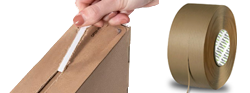
- Extend the life of packaging: in particular for e-commerce packaging, the use of adhesive opening and closing tapes allows optimal use of the packaging, up to the return by the end user if necessary (see visual below). Use for the customer is simplified and the impact on the environment is limited.
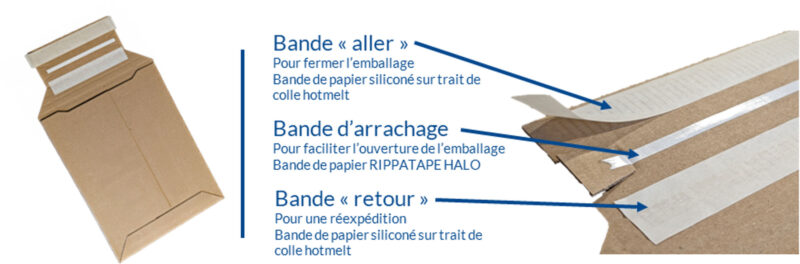
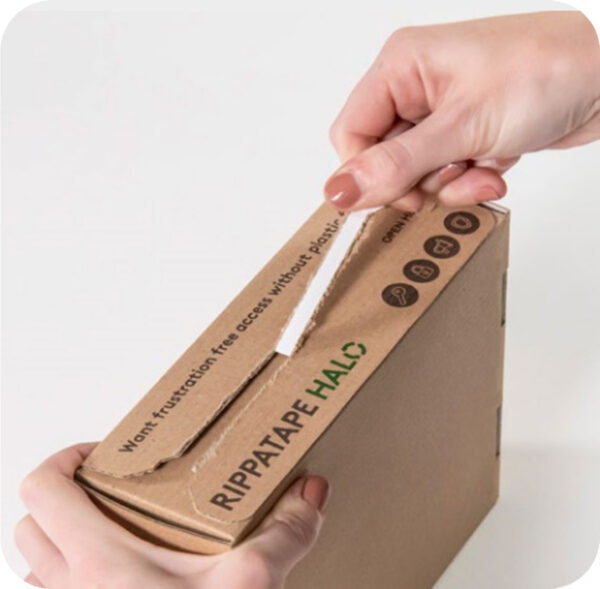
- Replace elements with a high environmental impact with more ecological alternatives: such as exchanging plastic adhesive tapes for paper adhesive tapes, eliminating staples, or using water-based adhesives for better recyclability.
- Recycling: using paper and cardboard packaging guarantees the possibility of reusing the fiber present in the used paper or cardboard product, several times in a row. Recycling allows for better management of waste volume. In 2020, paper and cardboard for recycling benefited from a utilization rate of 71.9% in France. The recovered fiber has therefore become the main source of material for the paper industry. Note that the use of Rippatape tapes, although made of plastic, allows 100% recyclability of the packaging thanks to its water-based adhesive.
Finally, according to a study entitled "Sustainable Food Packaging in 2040" carried out by Smithers at the request of the paper manufacturer UPM Specialty Papers, it appears that by 2040, consumers will no longer tolerate choosing between sustainability and convenience. Brands will need packaging solutions that have good end-of-life options without compromising their practicality and ability to appeal to consumers.
TREND #2: packaging personalization
At a time when consumers are increasingly turning to online shopping, packaging must necessarily evolve. It is no longer just a matter of communicating information about the product or highlighting the brand's logo. It is necessary to stand out from the competition and offer a real shopping experience to the customer. The new packaging must immerse consumers in the world and values of the brand: this is what is called "unboxing".
The term unboxing is an Anglicism that initially refers to a genre of videos published on the Web, in which people film themselves unpacking the purchased products they have just received. The success of these videos has aroused the interest of brands, which now integrate the unpacking process as part of the customer experience.
In concrete terms, this can mean:
- Using a box printed on the outside as well as on the inside, or personalized tape,
- Wrapping the garment in tissue paper accompanied by a thank you note
- Adding a card with the brand logo and other instruction or usage advice sheets, etc.
It is also possible to personalize the adhesive tapes used on the packaging. This allows for a better experience for the user and can also help to combat counterfeiting.
Today, we even talk about connected packaging or "smart packaging": "This is a physical packaging to which we will add a multimedia dimension, an interactive space. With this objective: that its digital content accompanies the customer wherever he is, thanks in particular to his smartphone."
A technology that makes this packaging connected is either integrated directly into the packaging (by printing) or printed on a label affixed to the packaging. The user scans the packaging using a QR code (Quick Response Code) or an NFC chip (Near Field Communication chip) and is directed directly to dedicated content.
Note that this technology can be applied to both primary and secondary packaging.
Many possibilities are thus opened up: for example, you can indicate on a connected food packaging the composition of the product, or its expiration date, communicate information on the end of life of the packaging: is it recyclable? compostable? reusable?
Similarly, it is possible to direct the customer to a dedicated page, a demonstration video, an event, content personalized according to a current promotional campaign, or even a promotional code.
Some brands also choose to direct the customer to their social networks to create engagement, and others to an online review site or a questionnaire to collect detailed information on the consumer's tastes.
Finally, connected packaging can also optimize the traceability of orders, by tracking the status and location of the package at any time.
AND BRANDSTROM?
Depuis 1977, nous distribuons en France des accessoires pour ces emballages papier-carton tels que : bandes d’arrachage, de renfort ou de fermeture, papier siliconé, poignées intégrables aux emballages. Et nous proposons également leurs systèmes d’application manuels, semi-automatiques ou automatiques à grande vitesse sur onduleuse, ou en séquentiel.
Decade after decade, we have built up a close relationship with the production, R&D, quality, supply and purchasing teams. Established on shared values such as customer service, commitment, technical expertise and innovation, this shared passion for packaging enables us to adapt our offer to meet constantly evolving market expectations.
We distribute innovative packaging accessories in Southern Europe (France, Italy, Spain, and Portugal) that have rapidly become leaders in their segment.
Sources:
[1] Wikipedia, https://fr.wikipedia.org/wiki/Emballage
[2] ADEME, "Packaging – definition and functions", https://communication-responsable.ademe.fr/marketing-publicite/marketing-responsable-packaging/packaging-definition-et-fonctions#:~:text=Le%20packaging%20correspond%20%C3%A0%20l,son%20utilisation%20par%20les%20consommateurs
[3] Conseil National de l’Emballage, “Packaging, an important player in product logistics”, September 2015, Emballages et Logistique (conseil-emballage.org)
[4] COFEPAC, "The paper-cardboard packaging industry – facts and figures", October 2022
[5] Carton ondulé de France, “An innovative manufacturing process”, https://www.cartononduledefrance.org/materiau-et-innovation/materiau-carton/
[6] LEPAPIER.FR, "The virtues of recycling", http://www.lepapier.fr/indust_recyclage.htm
[7] WIKIPEDIA, Definition of Unboxing, https://fr.wikipedia.org/wiki/Unboxing
Our products
Tear or reinforcement adhesive tapes

Double-sided adhesive tapes

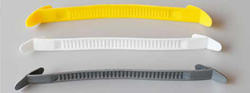
PERSSON plastic or paper strap handles
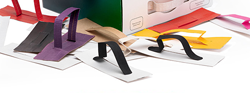
FORMUS molded plastic handles
100% Paper Tear-Off Tape
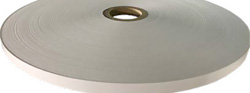
Silicone Paper
We represent, among others, the following companies:
Bagla Group