The paper and cardboard manufacturing sectors are grouped together under a single industry. They share the common feature of producing materials made from the same fiber: cellulose fiber. In 2022 in France, this industry[1] alone comprised 70 companies, 81 mills, and 119 paper machines in operation.
Products from the paper and cardboard industry are mainly used in the following sectors in France:
- The packaging sector, and more particularly for the food processing and e-commerce industries
- The graphic paper sector
- The hygiene paper sector
- Industrial and specialty papers
- Market pulp
In 2022, paper and cardboard consumption in France was 4,980.6 kt, which represents a decrease of 5.1% compared to the consumption in 2021, but is equivalent to the consumption in 2020 which was 4,942.9kt.
The recycling rate is 78.2% in 2022, and has remained fairly stable over the last 3 years.
Packaging papers and cardboards represent the largest share of paper and cardboard consumption in 2022 with 4181.9 kt, while graphic papers consume 511.5kt and hygiene papers 286 kt.
 ISSUE NO. 1: INNOVATION
R&D projects focus on cellulose fiber, the original material of paperboard. This substance is refined, processed, and enhanced through various processes to achieve the required barrier properties, without loss of recyclability and, if possible, without the addition of other materials.
Paper and cardboard[1] must address five eco-design challenges:
- The barrier: by becoming resistant to water, oil, and oxygen… to preserve and protect the products.
- The closure: designed to close without using components that could reduce its recyclability (adhesives, caps, etc.).
- Form: that is, adapting to new types of packaging: bottles, vials, trays…
- Transparency: to make packaged products visible.
- Elasticity: to make the material flexible, stretchy, and durable, particularly to enable new packaging designs.
Reducing the use of plastics[2] in certain products, such as food packaging, is a key issue: the focus is on bio-based materials—that is, those derived from animals or plants—to limit the use of non-renewable resources.
 ISSUE NO. 2: THE GREEN TRANSITION
The circular economy, a concept developed in the 2000s, aims to preserve the Earth’s limited resources. It seeks to reduce waste through the recycling and reuse of materials. The paper and cardboard industry embraced this concept early on by facilitating sorting and recycling. In fact, the corrugated cardboard sector has a recycling rate of 92%!
We won’t go into detail about recycling here, as it’s already covered in another article that you can read by clicking here: https://brandstrom.fr/zoom-sur-le-recyclage-du-papier-carton/
The other main challenge for the paper industry is its decarbonization.
The National Low-Carbon Strategy[3] (SNBC) sets a target for the industrial sector to reduce greenhouse gas (GHG) emissions by 35% by 2030 compared to 2015. We will attempt to discover which levers can be used to meet this objective and to identify the investments needed to achieve it.
The paper industry[4], which emitted 2MtCO2 in 2019—accounting for 2.3% of industrial emissions nationwide—had already reduced its annual GHG emissions by nearly 55% in 2020 compared to 2005.
The future trajectory foresees an average annual decrease of 2.9% in GHG emissions over the period 2020-2030. This assumes that public policies are implemented by the State to promote the decarbonization of processes, and that the competitiveness of the paper industry is maintained. Knowing that the latter is highly exposed to the risks of relocation (more than 60% of the paperboard consumed in France is already imported) to countries with a higher carbon footprint.
THE LEVERS:
- Continuous improvement actions, in particular through the replacement of equipment at the end of its life. Over the period 2015-2030, it was estimated that energy efficiency could be improved by around 0.5% per year, which would correspond to a reduction in annual emissions of 200 ktCO2e. The investments necessary to carry out these energy efficiency projects have been estimated at around 100 million euros over the period 2022 – 2030.
- The development of "biomass" cogeneration facilities on 3 to 5 paper sites over the period 2022-2030 would reduce emissions by nearly 300 ktCO2e per year. The investments necessary to carry out these biomass cogeneration projects have been estimated at more than 450 million euros.
- Decarbonized heat production possible through two technologies:
- the combustion of biomass, in substitution of natural gas, for the production of heat at a rate of 1.5 TWh/year11, will allow a reduction of GHG emissions related to the production of heat of 300 ktCO2e between 2015 and 2030;
- the combustion of Solid Recovered Fuels (SRF), replacing part of the carbonaceous heat sources, at a rate of 0.9 TWh/year12, will allow a reduction of GHG emissions of 60 ktCO2e between 2015 and 2030.
Other approaches: A study by ENEA-Frontier13 titled “Toward Decarbonized and Competitive Heat Production and Consumption” identified three additional methods for decarbonizing industrial heat: on-site biogas consumption at industrial facilities, solar thermal energy, and connection to a waste-to-energy plant (WTE). That said, the decarbonization potential and relevance of these options have yet to be assessed.
ISSUE NO. 3: EMPLOYMENT AND TRAINING
Slowdown in workforce reduction:
While our German neighbors have increased their workforce in the sector over the past fifteen years, the French industry has lost nearly 20,000 jobs[5] between 2005 and 2020, the year in which the sector had approximately 63,500 employees. This decline in employment is part of a broader trend that has affected the entire French industry. Over the last ten years, however, the decrease in workforce has slowed: -1.7% per year compared to -3.2% during the previous decade.
The production of " printing and writing" paper has been hit hard by the rise of digital technology. As for the production of pulp, paper, and cardboard, it is foreign competition that is weighing on business and employment. This is especially true as automation and increased productivity reduce the need for labor. Over the past 10 years, salaried employment has declined most sharply in manufacturing (-2.8% per year). The processing of raw materials into finished products has fared better (-1.3% per year).
Some subsectors have even seen growth. The production of toilet paper is thriving, as are packaging and labeling activities, which are benefiting from a growing market driven by the expansion of e-commerce and takeout sales, as well as the “plastic-bashing” trend that positions cardboard packaging as a sustainable solution. These activities are somewhat shielded from external competition because they cater to customized needs or small-batch production. Furthermore, they are generally carried out near consumption sites, due to transportation cost considerations.
Qualifications required:
Workers in the paper-cardboard industry are mainly skilled workers, accounting for over 55%. The manufacturing processes are, in fact, complex, technical, and specific. The trend is towards an increase in the level of qualification at the time of hiring. In 2019, more than half of the recruits held a Bac+2 level diploma or higher, compared to only 20% in 2003. Barely 17% of employees under 30 have a level equal to or lower than the CAP (Certificate of Vocational Aptitude), compared to 72% among those aged 50 and over. This requirement for qualification at the time of hiring is accompanied by an increasing difficulty in recruiting: 56% of recruitment projects were considered difficult in 2020 compared to 43% in 2017.
Workforce renewal and training:
However, the sector will need to recruit because the age pyramid is unbalanced.
- Employees aged 50 and over account for 34% of the workforce.
- Employees under 30 only account for 12% in the sector in 2019, compared to 17% in the industry as a whole.
- When it comes to apprentices, thepaper and cardboardsector lags behind: apprentices account for only 1.9% of the workforce, compared to 3.6% for the industry as a whole and 6% for the leather goods sector. The industry has, however, established an ambitious continuing education and certification system that trains unskilled new hires and supports career development. This results in strong employee retention: 60% of employees have been with the company for more than nine years.
The main challenge for the sector is undoubtedly that of attractiveness: to meet the needs for labor and, above all, for skills upgrading, in order to support the necessary digitization of the production tool. This is a challenge that concerns companies in the sector, but also all actors in politics, training, and employment. Because if the sector does not directly represent a priority strategic issue for public authorities, these companies constitute an essential link in the production chain for multiple activities, and an employment opportunity for many young people. As such, this local industry, which covers the entire country, has a role to play in the development and cohesion of the territories. Which is a priority strategic issue.
CHALLENGE NO. 4: KEEPING PACE WITH THE DIGITAL TRANSITION
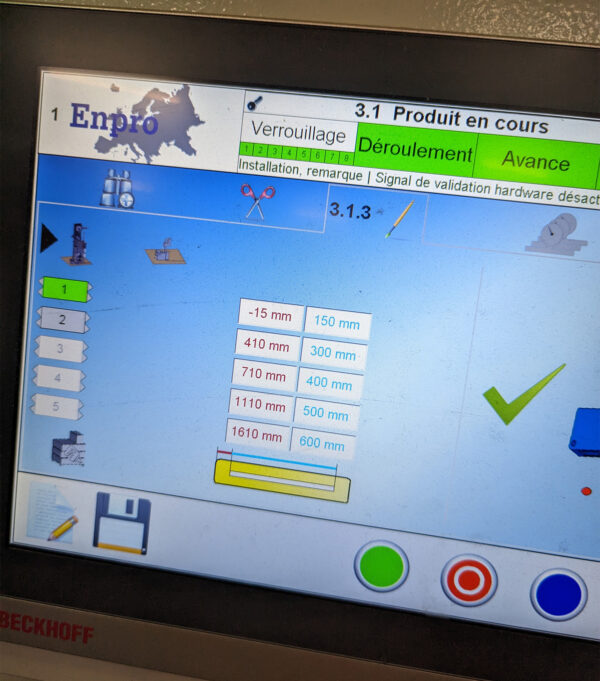 Today, companies of all sizes, in all sectors and all services, are in demand. The objective is to have a more flexible, agile, and scalable production, in order to adapt more easily to an increasingly demanding demand for personalized products. Industry 4.0 also opens up new perspectives in terms of profitability and competitiveness gains.
In terms of production:
For Fabien Becouze[6], Industry 4.0 Coordinator at the Bosch plant in Moulins, it is of course about connecting machines and systems to each other, but not only. It is also and above all about allowing people to easily access machine data and flow data, to make the best decisions in collaborative mode.
The Braking division of the Bosch group is even the first division to have standardized and connected all the means of production of ABS and ESP braking systems worldwide.
The "flexible" factory is within reach thanks to a wide range of new tools, such as fully digital continuous improvement dashboards, interactive quality control, smart workstations, and predictive maintenance solutions, among others.
In the Renault Group, the new generation industry aims to equip employees with mobile tools in order to access information quickly where they produce value, and therefore to eliminate 20 to 30% of unnecessary tasks. They have developed conditional and predictive maintenance directly on the machines, but also remotely. They can manage their factories and their production lines in real time thanks to data acquisition throughout their processes and flows. And finally, they have set up a « Track & trace » system that allows them to track products, parts, packaging, etc.
The challenge is also to involve all suppliers and subcontractors in this approach.
In terms of energy management:
The objective is to reduce energy consumption and environmental impact by quickly identifying abnormal consumption (for example, lighting or a machine not switched off) and automatically triggering alerts. By quantifying the results of the improvements made to the equipment and comparing the machines, this allows factories to align themselves with those that consume the least. The new tools measure in real time the electrical consumption, air flow, heating or temperature of cooling systems for example.
HIGHCAST
Highcast offers an artificial intelligence solution to optimize energy costs and CO2 emissions through better production planning. The decision support tool makes it possible to control the consumption of energy-intensive machines according to the forecast of the real cost of electricity in order to control profitability and reduce the environmental impact of the factory. More than 10% savings are observed in equipped factories.
For more information, visitinfo@brandstrom.fr
In terms of logistics:
Industry 4.0 also aims to reduce inventories and improve efficiency in the internal supply chain by synchronizing physical flows, orders, supplies, sales histories, etc. Storage costs are thus reduced, stockouts are less frequent, and transport costs are optimized. These new tools further facilitate the completion of inventories, resulting in significant time savings for teams.
In terms of security:
All these advances also help improve not only the ergonomics but also the safety of work tools and workstations: video recognition tools, sensors worn by operators, smart vests for lone workers, and so on.
Finally, of course, IT security is a real challenge in this transformation, involving, among other things, network segmentation, data protection, and the disabling of USB ports on all production equipment, etc.
Companies must therefore approach the digital transition as a 360° subject: corporate strategy, innovation, business model, organization, management, training, skills, etc. Creating a digital culture is essential. The challenge is ultimately less technological than human, as teams must embrace and commit to this transformation.
The industry of the future must therefore serve to simplify users’ daily lives so that they can devote more time to what truly creates value. It helps elevate the role of the operator and is an excellent way to attract millennials, increase the number of women in the industry, and rebuild engagement within companies. According to Laurent Ruhlmann, Director of Industrial Performance at Groupe SEB, “the industry of the future restores dignity to the roles of men and women in the factory.”
[1] CITEO, The challenges of paper-cardboard materials, https://www.citeo.com/le-mag/les-defis-du-materiau-papier-carton
[2] MESCARTONS.COM, All about cardboard material, The cardboard industry, 12/11/2020, https://www.mes-cartons.com/blog/tout-savoir-sur-le-materiau-carton/industrie-carton.html
[3] MINISTERES DE L’ECONOMIE, DES FINANCES ET DE LA SOUVERAINETE INDUSTRIELLE ET NUMERIQUE, 03/09/2022 – Publication of the roadmap for decarbonization of the Paper-Cardboard industry, https://presse.economie.gouv.fr/2130-publication-de-la-feuille-de-route-de-decarbonation-de-la-filiere-papier-carton/
[4] COPACEL, Decarbonization of industry, Roadmap of the Paper Industry, February 2022, https://www.copacel.fr/wp-content/uploads/2022/03/20220216_copacel_feuille_de_route_de_decarbonation_filiere_papier_carton-1.pdf
[5] OPCO2I, State of employment in the Paper-Cardboard industry, https://observatoire-competences-industries.fr/etudes/portrait-branche-industrie-papier-carton/
[6] BOSCH REXROTH, White paper Expertise "Factory of the future: How to accelerate and succeed in its industrial transformation? Experience feedback, advice and solutions ».
Our products
Tear or reinforcement adhesive tapes

Double-sided adhesive tapes

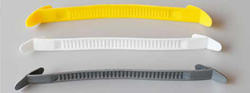
PERSSON plastic or paper strap handles

FORMUS molded plastic handles
100% Paper Tear-Off Tape

Silicone Paper

We represent, among others, the following companies:
Bagla Group